Oculoplastics
How do tears work?
Tears are produced by the lacrimal glands which sit above the eyeball on the lateral part of the eyelid. Tears lubricate the surface of the eye, wash away dust and grit, fight infection and help you see clearly. Each time you blink, fresh tears wash over the eye and drain away via a drainage channel called the punctum. From here, they flow to the tear sac via a small tube called the canaliculus, into the tear duct to the back of the nose.
What is a watery eye?
Watery Eye or Epiphora can happen to anyone at any age and has many causes. Often it is a short-term complaint due to a temporary irritation, however, chronic watery eyes which have not responded to conservative treatment, (from your Optometrist or General practitioner) require further investigation by an oculoplastic surgeon.
What causes watery eye?
There are 4 main causes of watery eye or epiphora: Irritation, Ectropion, Blockage and Dry Eye.
Irritations from dust, allergies, infections, ingrowing eyelashes, chemicals etc… can be managed effectively and simply with support from a pharmacist, optometrist or general practitioner
Ectropion, where the lower eyelid position pulls the punctum away from the eye, causes the tears to spill over because they cannot drain in the normal way. This may require surgical correction (Ectropion repair) by an oculoplastic surgeon.
Blockage of the tear ducts requires careful investigation to find out where in the drainage system the blockage is situated.
Dry Eye can cause either reflex tearing to re-wet the eye which makes them seem watery, or the surface mucous layer on the eye may not hold the tears sufficiently long enough between blinks, so the tears spill over. Both types of dry eye can make the eyes feel watery and that can seem like a paradox. A visit to the optometrist to check for dry eye is quick and easy as it is important to treat it with the correct formulation of dry eye drops for you.
How can my tear drainage be checked?
Your tear drainage can be assessed in an outpatient’s appointment by a specialist team using a microscope and some fluorescent yellow dye in some cases. Once it becomes clear what is causing the watery eye, a plan can be discussed to correct the problem.
What can you do if my tear drainage is blocked?
If the blockage is due to narrowing of the canaliculi or a small punctum then a small procedure called Punctoplasty may be recommended.
If the blockage is deeper, beyond the tear sac, due to the tear duct being narrow or blocked then a more complicated procedure called a DCR, (Dacryocystorhinostomy), may be recommended.
Why do my eyes suddenly water?
Reflex tearing is the sudden watering of the eyes due to contact with a foreign body in the eye such as dust or grit, a chemical reaction, allergy, irritation from an infection or ingrowing eyelash. If you wear contact lenses, they should not be worn if the eye is showing signs of irritation. If the problem doesn’t resolve quickly, within a few hours, then it is recommended that you seek the advice of your optometrist.

What is Punctoplasty?
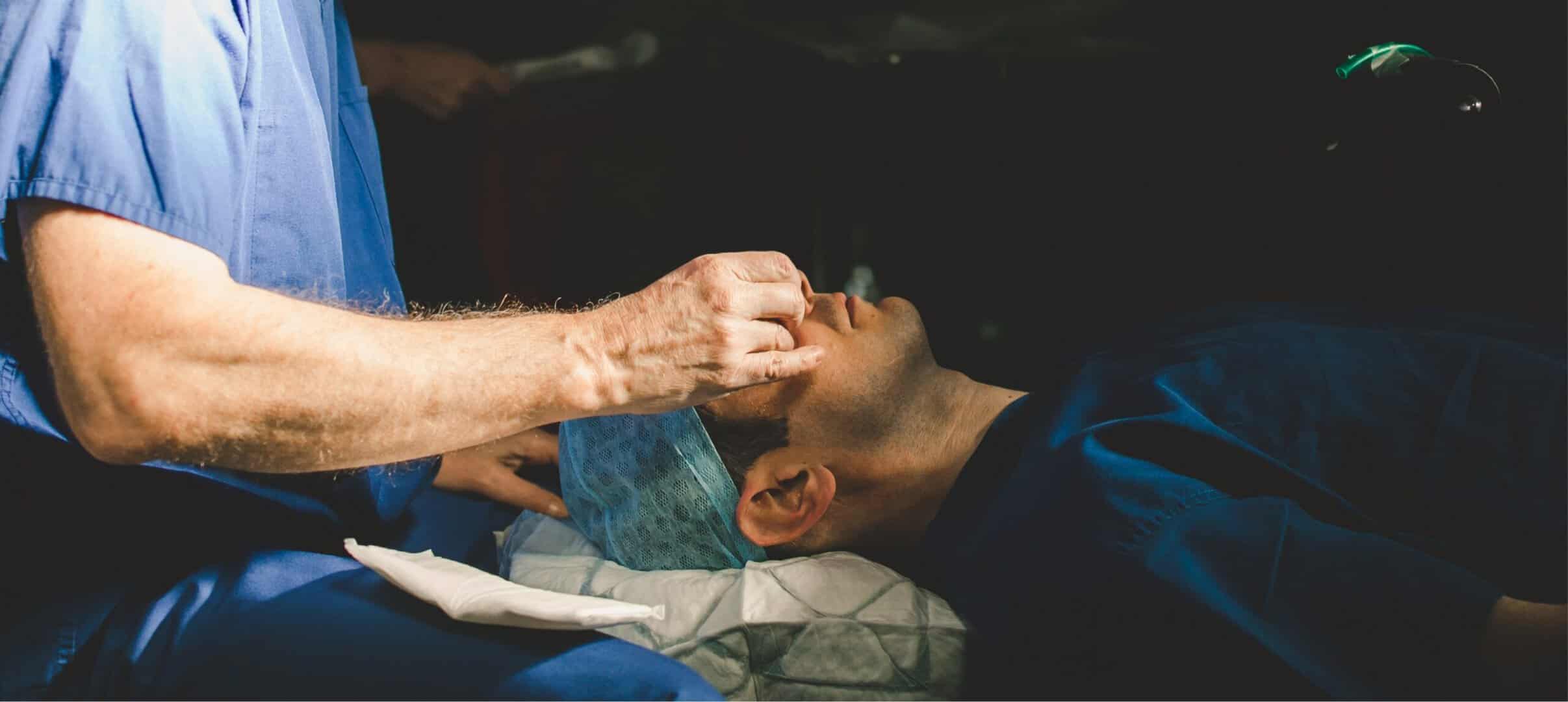
Where the opening to the drain in the lower eyelid has become blocked or narrow (at the punctum), a minor procedure may be required to dilate and widen the punctum to allow the tears to flow into the tear sac. This procedure takes less than half an hour and is performed under local anaesthetic. There is usually no need for stitches.
How long does it take to recover from Punctoplasty?
You may experience some localised swelling and bruising for the first week to ten days following punctoplasty. Any discomfort can be managed with over-the-counter analgesia such as paracetamol. The eye may remain watery until the swelling has resolved. Full recovery is achieved by 2 weeks in most cases.
What are the complications of Punctoplasty?
After a punctoplasty procedure you can expect to have some localised swelling and bruising which will resolve on its own. Paracetamol may be needed initially if there is discomfort and antibiotic ointment is prescribed to help prevent infection. Occasionally, if the drainage was narrow due to chronic inflammation, the drainage may become narrow again. Uncommonly, the cornea may be scratched during the procedure, however, this heals well within a couple of days.
What is DCR?
Dacryocystorhinostomy (DCR) is a more complex procedure which is performed either via external incision or endoscopically (internally) via the nose. The purpose of the surgery is to create a new channel to bypass the original blockage. It can be performed under local anaesthetic with sedation or under general anaesthetic and takes just over an hour to complete. Most patients go home the same day but will need to be driven home by a friend or relative. Follow up is required after 4-6 weeks to remove the small rods which are used to keep the new drainage open as it heals.
How long does it take to recover from DCR?
External DCR takes place to the side of the nose with a small incision which heals quickly within a few weeks. The stitches are removed after 7-10 days. The scar heals well and a good cosmetic result is achieved.
Endoscopic DCR takes place internally via the nasal cavity. Any stitches are usually hidden. Recovery takes 10 days with no visible scarring afterwards.
Follow up is required at 4-6 weeks to remove the silicone rods used to support the healing drainage channels.
What are the complications with DCR?
Discomfort from surgery can be managed with paracetamol or codeine but Aspirin, drugs containing aspirin and ibuprofen must be avoided for the initial two weeks postoperatively. There is a risk of nose bleeds, so for the first 24 hours patients are advised to avoid hot baths, showers, hot drinks and hot meals to minimise the risk of nosebleed. The risk of infection is rare, but drops are given as a precaution to minimise the risk. If blockage reoccurs, a different rod may be required to help keep the new drainage open.
Is DCR painful?
Local anaesthetic is given by a small injection to keep the procedure pain free. There is often some initial mild discomfort post operatively that can be managed well with paracetamol.
What is Dry Eye? – When the tears do not stay on the surface of the eye for long enough the eye can become dry.
How do I know if I have Dry Eye? The symptoms for dry eye are very varied. You might have intermittently blurry vision which changes when you blink. Your eyes may be itchy, gritty, sore or red rimmed. Or they can be completely comfortable but become very watery easily when you are outside, in the wind or if you go from a warm to a cold environment. If you are unsure, it is best to have it checked.
What are Tears? Tears are important for lubricating the eye, nutrient exchange and washing away debris and dust that enters the eye from the environment. Your tears are made up of three distinct layers:
- A mucin layer, closest to the eye, which helps the tears cling to the surface of the eye, (the cornea).
- A water layer which is made up mostly of water from the lacrimal gland – this layer helps to maintain focussing of light into the eye for good vision, also it provides nutrient and oxygen exchange across the cornea.
- A lipid (oily) surface layer which helps seal the watery layer and stops the tears from evaporating into the air.
What causes Dry Eye? There are many different causes of dry eyes. Eyes tend to become drier as a natural part of aging. Sometimes, eyes can become dry due to incomplete blinking, long periods of time spent looking at a computer screen, blocked glands in the eyelids which affects the mucin and lipid layers. Contact lens wear can increase the risk of dry eye symptoms if your eyes are already dry. Allergies can make our eyes feel dry, but the antihistamines we take for our allergies can make the eyes dry. Other medicines such as the contraceptive pill can make you have dry eyes.
Chronic inflammation of the skin and eyelids such as blepharitis, dermatitis, rosacea and eczema can cause dry eye. There are also systemic conditions which affect the whole body, such as rheumatoid arthritis, Sjogren’s syndrome, and auto immune conditions which can also cause dry eye.
How can I find out more about Dry Eye? You can ask your optometrist to look for dry eye when you have your eyes tested. They will look at your eyes on the slit lamp microscope to examine the surface of the eye and the tear film. Often this means using a yellow vital stain (dye) called sodium fluorescein which is harmless but makes the tears easier to see under a blue light. Some specialist optometrists offer specific dry eye clinics.
What treatment is available for dry eye? Most cases of dry eye are treated with eye drops especially formulated for frequent use to mimic closely the natural tear film. The best drops to use are the ones your optometrist recommends and are preservative free. Preservatives in eye drops can often irritate the eye with long term use.
If your current treatment isn’t working for you, you can ask your optometrist to suggest an alternative. The treatment offered will depend on what is causing the dry eye.
Can an ophthalmologist help my dry eye? An ophthalmologist can help your dry eye if you are struggling to get any relief from the treatments you have tried. Specialist medications or punctal plugging may be some of the options you are offered to give you relief from your symptoms.