Oculoplastics
How long does it take for a Chalazion to heal?
A chalazion is an infection in the Meibomian glands of the eyelid, and it has three stages of healing from the initial stage to resolution. The full process can take several weeks.
What are the stages of Chalazion healing?
In the Initial stage (up to week 1), the chalazion begins as an inflamed area on the eyelid, which can be red and swollen. It is firm to the touch. Early intervention at this stage with eyelid hygiene measures and regular warm compresses can be very effective.
The Active stage (week 1-2) is where the chalazion becomes more obvious as a lump. It may grow a little larger with some discomfort, but there should not be pain. At this stage, the chalazion is still actively inflamed, and eyelid hygiene measures and warm compressing are advisable to allow the inflammation to reduce.
The Resolution stage (week 2 onwards) is the longest stage. During this stage, the chalazion can spontaneously resolve and disappear. It becomes less tender, and any redness disappears. If it does not resolve within this time, it persists as a chronic painless bump which is the same colour as the skin. Discomfort is gone, and there is no redness. It is advisable to keep treating the chalazion with eyelid hygiene measures and warm compresses to encourage natural resolution.
How do I know if my chalazion is healing?
You will know that your chalazion is healing when it follows the 3 stages. It starts small, becomes tender, red and larger and then settles over the coming weeks and gradually disappears.
How long should I do warm compressing for my chalazion?
Chalazia are very variable and respond well to regular warm compresses, which should be performed 3-4 times a day for at least 10 minutes at a time. Often, people stop using the warm compress because they don’t get quick enough results, but it is worth persisting. To get a long enough duration of heat, using a hot face cloth does not usually work. There are many suitable options which you can reuse every time, warm up in the microwave and are the right shape and size for your eyes.
Why do I have to wait to have a Chalazion removed?
In the initial stages of a chalazion, the gland in the eyelid is acutely inflamed. Treating the chalazion surgically at this stage would not guarantee that the gland would drain, and it would not heal optimally.
When do I need to see an ophthalmologist with my chalazion?
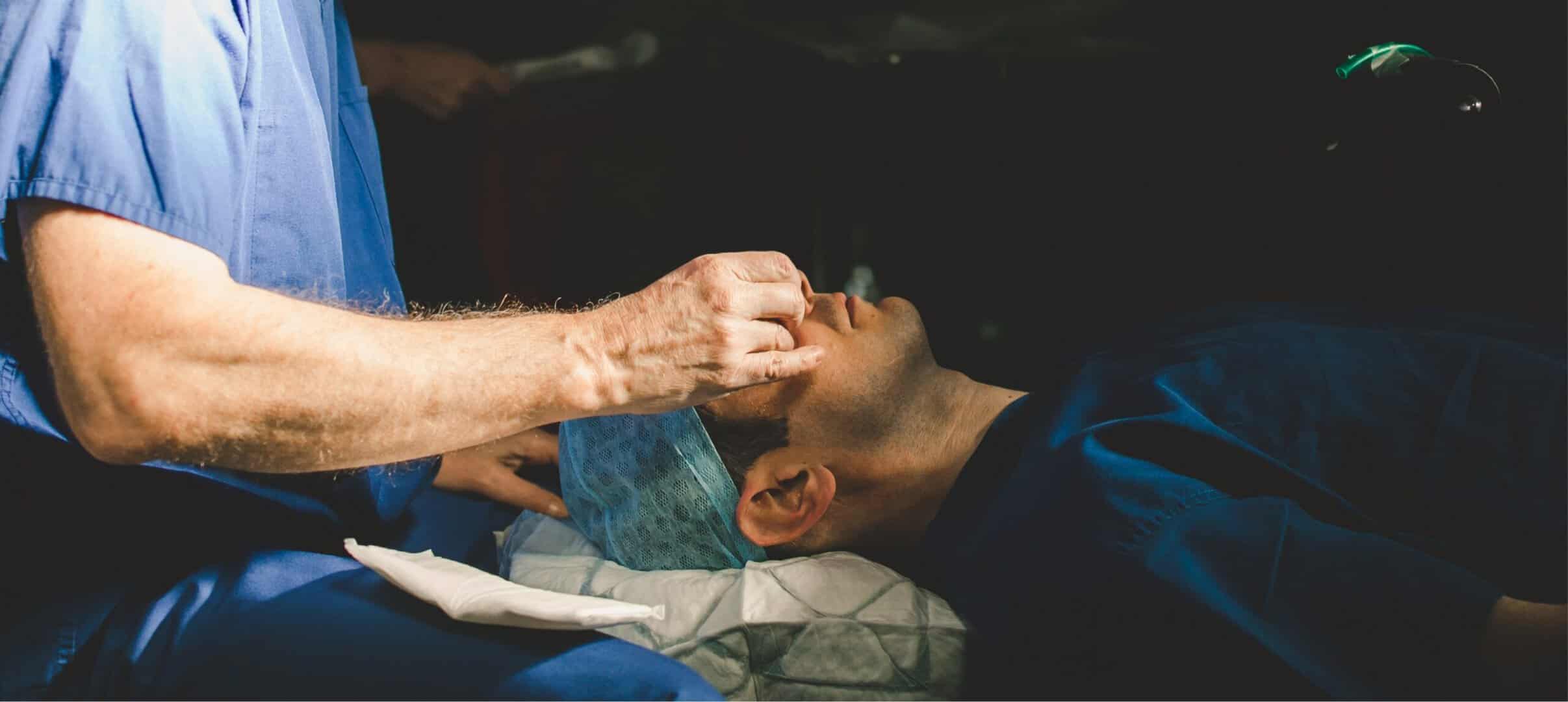
If you are certain you have a chalazion, it is a good idea to treat it at home to see if it will resolve spontaneously. If it becomes chronic and is no longer inflamed, seek the advice of an ophthalmologist who can perform a small surgical procedure to remove it.
When to see an ophthalmologist sooner?
- If you have a lump on the eyelid and are not sure if you have a chalazion.
- If the redness on the eyelid is painful and spreading throughout the eyelid, you need antibiotic treatment quickly to prevent cellulitis.
- If it is affecting the vision.
- You are worried that it is not resolving.
- It is changing rapidly.
- It is causing loss of eyelashes around it.
- It’s bleeding.
Please see our information on Oculoplastics and treatment of Chalazia.