For many people, cataract surgery is life-changing. It restores vision by removing the eye's cloudy natural lens and replacing it with a clear artificial intraocular lens (IOL), helping you see more clearly and comfortably again. However, while cataract surgery itself is a highly successful procedure, one of the most important decisions you'll make before treatment is which intraocular lens to choose.
Today’s cataract surgery offers far more than simply restoring eyesight. Advances in lens technology mean many patients now have the opportunity to improve how they see at different distances, reduce their dependence on glasses and tailor their visual outcome to suit their lifestyle. Whether you enjoy reading, driving, travelling, working on a computer or playing sport, the lens selected during your cataract surgery can have a lasting impact on your day-to-day life.


At Sapphire Eye Care, we believe there is no such thing as a universally “best” artificial implant lens. Instead, there is the lens that is best suited to your eyes, prescription, lifestyle and visual priorities. Every recommendation is made following a detailed consultation, comprehensive diagnostic assessment and discussion with your consultant ophthalmic surgeon, ensuring your treatment is tailored to your individual needs.
In this guide, we’ll explain the different cataract lens options available, the advantages and limitations of each, and why personalised lens selection plays such an important role in achieving the best possible outcome.
Why Choosing the Right Cataract Lens Is So Important
Many patients understandably focus on the cataract itself, assuming the surgery is simply about removing the cloudy lens affecting their vision. While this is certainly the first step, the lens that replaces it will remain inside your eye permanently and will determine how you see long after your cataract has been removed.
Unlike a pair of glasses, an intraocular lens cannot simply be changed to suit different activities. That’s why selecting the right lens deserves careful thought and expert guidance.
The lens you choose can influence many aspects of your vision, including:
- Your ability to read without glasses
- Distance vision for driving and travelling
- Intermediate vision for computers and cooking
- Night-time vision
- Contrast sensitivity
- Your overall dependence on spectacles after surgery
For some patients, having the widest possible range of vision is the priority. Others value the sharpest possible distance vision, while some may prioritise reading or wish to minimise visual side effects such as halos around lights. There is no single answer that suits everyone.
This is why consultant-led assessment is so important. Rather than recommending the same lens for every patient, your surgeon will consider your prescription, eye health, lifestyle, occupation and visual expectations before advising which option is most appropriate.
Ultimately, successful cataract surgery isn’t just about removing the cataract—it’s about choosing an artificial implant lens that helps you enjoy the quality of vision that’s right for you.
Understanding Your Cataract Lens Options
Modern cataract surgery offers several different types of intraocular lens, each designed to achieve different visual outcomes. Understanding how these lenses work can help you have a more informed discussion during your consultation.
At Sapphire Eye Care, every lens recommendation is based on your individual assessment rather than a one-size-fits-all approach.
The main lens options include:
- Standard Monofocal Lenses
- Multifocal Lenses
- Trifocal Lenses
- Extended Depth of Focus (EDOF) Lenses
- Toric Lenses (for patients with astigmatism)
Each option has its own benefits and potential trade-offs.
What Our Patients Say
Standard Monofocal Lenses
Standard monofocal lenses remain the most commonly implanted intraocular lens worldwide and continue to provide excellent visual outcomes for millions of patients every year.
These lenses are designed to provide clear focus at one chosen distance. Most patients choose to optimise distance vision, allowing them to see clearly for activities such as driving, walking and watching television. Reading glasses are then typically required for close work.
Alternatively, some patients choose to optimise near vision if reading or close tasks are their main priority.
Benefits of Monofocal Lenses
Monofocal lenses offer several important advantages:
- Excellent clarity at the selected focal distance
- High contrast sensitivity
- Predictable visual outcomes
- Monofocal artificial implant lenses are generally less likely to cause visual effects such as halos or glare than multifocal and some extended depth of focus (EDOF) lenses. However, they normally provide clear vision at one chosen distance, meaning glasses may still be required for other activities.
- Suitable for a wide range of patients
Because of their optical simplicity, monofocal lenses often provide exceptionally crisp distance vision with minimal unwanted visual effects.
Things to Consider
While monofocal lenses deliver excellent vision at one focal point, they cannot naturally provide clear focus across multiple distances.
Most patients therefore continue to require glasses for reading, computer work or other close activities if distance vision has been prioritised.
For many people, however, this remains an excellent compromise, particularly if achieving the sharpest possible distance vision is their primary goal.
Multifocal Lenses
Multifocal intraocular lenses are designed to reduce dependence on glasses by providing multiple focal points within a single lens.
Instead of focusing at only one distance, these lenses allow many patients to see more clearly when reading, using digital devices and looking into the distance without constantly changing spectacles.
This makes them an attractive option for patients who lead active lifestyles and value greater visual independence.
Benefits of Multifocal Lenses
Suitable patients may experience:
- Improved near vision
- Better intermediate vision
- Good distance vision
- Less reliance on reading glasses
- Greater convenience during everyday activities
Many patients appreciate being able to move between different activities without reaching for glasses throughout the day.
Things to Consider
Although multifocal lenses offer significant benefits, they are not suitable for everyone.
Because the lens divides incoming light between several focal points, some patients notice:
- Halos around lights
- Increased glare when driving at night
- Slightly reduced contrast sensitivity
These effects often improve as the brain adapts, but they remain an important consideration when deciding whether multifocal lenses are appropriate.
Patients with certain retinal conditions, glaucoma or other eye diseases may also be better suited to alternative lens options.
Trifocal Lenses
Trifocal lenses build upon multifocal technology by providing three distinct focal ranges:
- Near vision
- Intermediate vision
- Distance vision
This additional intermediate focus makes them particularly well suited to modern lifestyles, where computer screens, tablets and smartphones are used extensively throughout the day.
For many patients, trifocal lenses offer the greatest opportunity to reduce dependence on spectacles across a broad range of daily activities.
Benefits of Trifocal Lenses
Many suitable patients enjoy:
- Excellent reading vision
- Comfortable computer vision
- Clear distance vision
- Greater overall spectacle independence
- Smooth transitions between different activities
Patients who enjoy travelling, reading, hobbies or active lifestyles often find trifocal lenses particularly appealing.
Things to Consider
As with multifocal lenses, trifocal lenses may increase the likelihood of:
- Halos
- Glare
- Night-time light phenomena
Although these symptoms often lessen with time, careful patient selection is essential to achieving the best results.
Extended Depth of Focus (EDOF) Lenses
Extended Depth of Focus (EDOF) lenses use sophisticated optical technology to create a continuous range of focus rather than several distinct focal points.
The result is a smoother transition between viewing distances while maintaining excellent image quality and contrast.
For many patients, EDOF lenses provide an excellent balance between visual quality and reduced dependence on glasses.
Benefits of EDOF Lenses
Potential advantages include:
- Excellent distance vision
- Strong intermediate vision
- Useful functional near vision
- Reduced glare compared with some multifocal lenses
- Good contrast sensitivity
- Greater visual comfort in varying lighting conditions
These characteristics make EDOF lenses particularly popular among patients who spend significant time driving, working on computers or enjoying outdoor activities.
Things to Consider
Although many patients require glasses less often after EDOF lens implantation, some may still use reading glasses for prolonged close work or very small print.
For this reason, EDOF lenses are often viewed as providing an excellent balance between spectacle independence and visual quality, rather than eliminating the need for glasses altogether.
Toric Lenses
Not every patient has perfectly round eyes. Many people also have astigmatism, where the front surface of the eye is shaped more like a rugby ball than a football. This irregular curvature causes light to focus unevenly, leading to blurred or distorted vision.
Toric intraocular lenses are specially designed to correct both the cataract and pre-existing astigmatism at the same time.
By correcting astigmatism during cataract surgery, toric lenses can improve the sharpness of vision and reduce the need for glasses after treatment.
Benefits of Toric Lenses
Suitable patients may benefit from:
- Sharper overall vision
- Reduced overall astigmatism
- Improved distance vision
- Greater spectacle independence
- Better visual quality compared with leaving astigmatism uncorrected
Is a Toric Lens Right for Everyone?
No.
Toric lenses are specifically designed for patients with clinically significant astigmatism.
During your consultation, your consultant ophthalmic surgeon will carry out detailed corneal measurements and advanced diagnostic scans to determine whether a toric lens would improve your visual outcome.
How Your Lifestyle Influences Lens Selection
One of the biggest misconceptions about cataract surgery is that there is a single intraocular lens that is right for everyone. In reality, the most appropriate lens depends not only on your eyes but also on how you use your vision every day.
A lens that delivers excellent results for one patient may not be the best choice for another. Someone who spends long hours working on a computer may have very different visual priorities to someone who enjoys reading, drives frequently at night or plays golf several times a week.
This is why, during your consultation at Sapphire Eye Care, your consultant ophthalmic surgeon will take time to understand your daily routine, hobbies, occupation and visual expectations before recommending the most suitable lens.
For example:
- Frequent drivers may prioritise excellent distance vision and strong contrast sensitivity, particularly for driving in low-light conditions.
- Office workers often benefit from good intermediate vision for computer screens and digital devices.
- Avid readers may place greater value on clear near vision for books, newspapers and hobbies.
- Golfers, walkers and travellers frequently prioritise crisp distance vision with reduced reliance on glasses.
- People with active lifestyles may prefer greater spectacle independence across a range of everyday activities.
Rather than recommending the latest or most expensive lens, your consultant will recommend the option that best supports the way you live.
Is a Premium Cataract Lens Always the Best Choice?
Premium intraocular lenses can offer significant benefits for suitable patients, but they are not automatically the right solution for everyone.
Many people assume that a premium lens must always deliver better results simply because it is more advanced. In reality, successful cataract surgery depends on matching the correct lens to the individual patient rather than choosing the most sophisticated technology available.
For some patients, a premium lens may reduce dependence on glasses and provide excellent vision across multiple distances. For others, a high-quality monofocal lens may produce the clearest, most predictable outcome.
Several factors influence whether a premium lens is appropriate, including:
- Your prescription
- The health of your retina and macula
- The presence of glaucoma or other eye conditions
- The amount of astigmatism present
- Your visual expectations
- Your willingness to accept potential visual phenomena such as glare or halos
Choosing the most appropriate lens is therefore a balance between maximising visual performance and selecting an option that best suits your eyes and lifestyle.
At Sapphire Eye Care, recommendations are always based on clinical suitability rather than a one-size-fits-all approach.
Learn More About Private Cataract Surgery
Short expert videos designed to answer common questions patients ask before treatment.
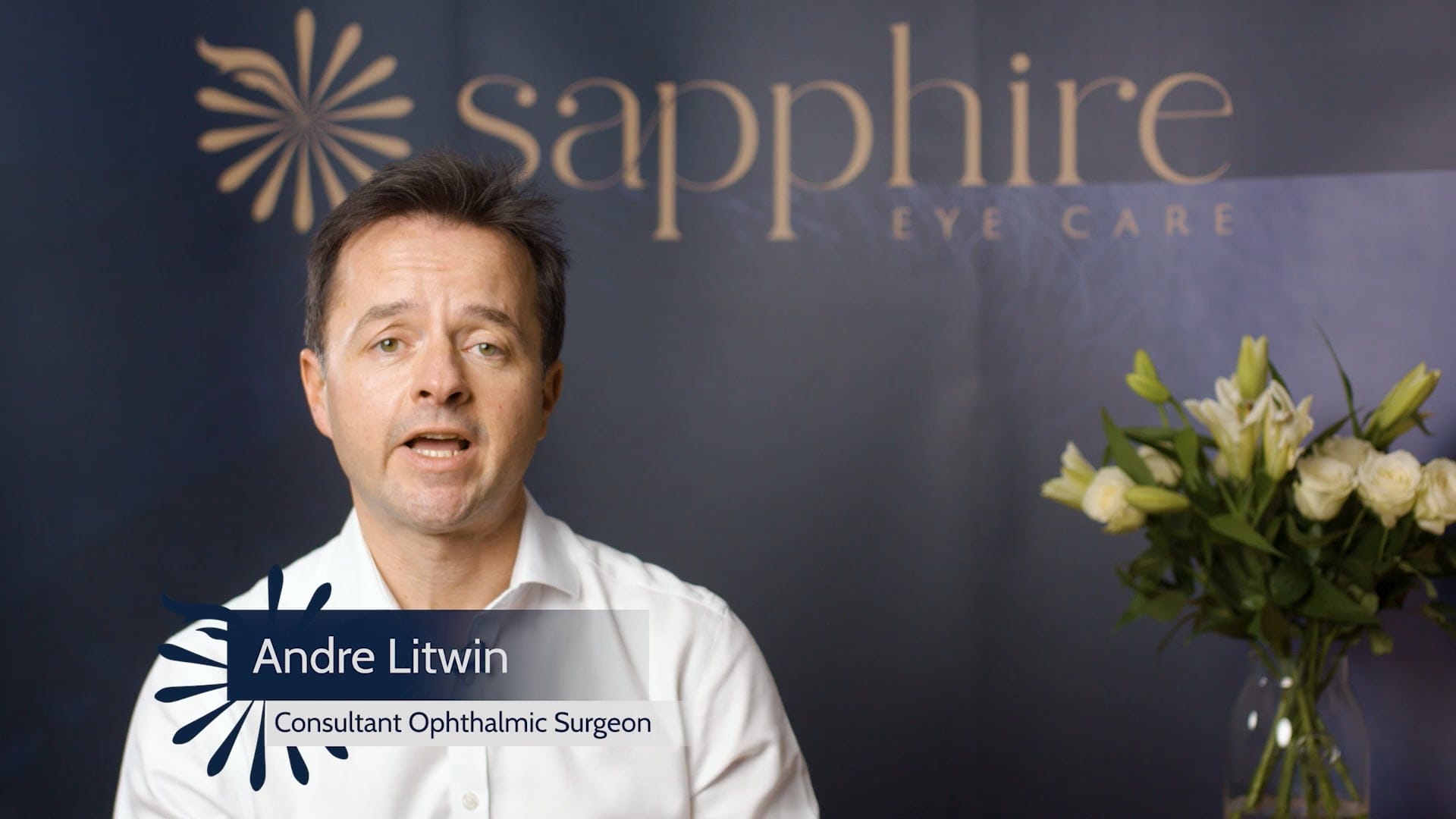


How Your Consultant Chooses the Right Lens
Selecting an intraocular lens involves far more than simply deciding whether you would like to reduce your reliance on glasses.
Before making a recommendation, your consultant ophthalmic surgeon carries out a comprehensive assessment to build a complete picture of your vision and eye health.
This typically includes:
- A detailed discussion about your symptoms and visual priorities
- Measurement of your prescription
- Advanced diagnostic imaging
- Assessment of your cornea and astigmatism
- Examination of your retina and optic nerve
- Review of any previous eye surgery or existing eye conditions
- Discussion about your occupation, hobbies and daily activities
Your consultant will also talk through the advantages and limitations of each lens option, helping you understand how different lenses may affect your vision after surgery.
The goal is not simply to restore clearer eyesight, but to recommend the lens that is most likely to provide the visual outcome you are hoping to achieve.
NHS vs Private Cataract Lens Options
Both NHS and private cataract surgery involve removing the cloudy natural lens and replacing it with an artificial intraocular lens. However, the range of lens options available can differ.
Within the NHS, treatment is designed to restore safe, functional vision. Standard monofocal lenses are routinely provided and continue to deliver excellent outcomes for many patients.
Private cataract surgery offers greater flexibility when selecting your intraocular lens. Depending on your individual suitability, you may have access to premium lens technologies including:
- Multifocal lenses
- Trifocal lenses
- Extended Depth of Focus (EDOF) lenses
- Toric lenses for astigmatism
Having access to a broader range of lens technologies allows treatment to be tailored more closely to your visual priorities and lifestyle.
Your consultant ophthalmic surgeon will explain whether these options are appropriate for your eyes and help you understand the benefits and trade-offs associated with each lens type.
What Our Patients Say About Blepharoplasty
Can Cataract Surgery Eliminate the Need for Glasses?
This is one of the most common questions patients ask before cataract surgery.
The honest answer is that it depends.
Many patients find they wear glasses much less frequently after surgery, particularly if they are suitable candidates for premium intraocular lenses. Others continue to use glasses for certain activities such as prolonged reading, detailed close work or driving at night.
Several factors influence your likely outcome, including:
- The lens selected
- Your prescription before surgery
- The health of your eyes
- Whether all your astigmatism is corrected
- Your individual visual expectations
Your consultant will discuss what level of spectacle independence is realistically achievable during your consultation, ensuring you have a clear understanding of what to expect before making your decision.
Frequently Asked Questions
Which is the best artificial implant lens?
There is no single lens that is best for everyone. The most appropriate option depends on your prescription, eye health, lifestyle and the visual outcome you hope to achieve. Your consultant ophthalmic surgeon will recommend the lens that best suits your individual needs.
Should I choose a monofocal or multifocal lens?
Both lens types offer excellent outcomes but are designed for different priorities. Monofocal lenses provide outstanding vision at one chosen distance, while multifocal lenses aim to reduce dependence on glasses by improving vision across multiple distances. Your consultant will help you decide which approach is most suitable.
What is an Extended Depth of Focus (EDOF) lens?
EDOF lenses create a continuous range of focus, providing excellent distance vision together with strong intermediate vision and useful near vision. They are often chosen by patients who want reduced reliance on glasses while maintaining high-quality visual performance.
What is a toric lens?
A toric intraocular lens is designed for patients with astigmatism. It corrects both the cataract and the astigmatism during the same procedure, helping to improve visual clarity and reduce dependence on glasses.
Can I change my intraocular lens later?
Although lens exchange surgery is possible in certain circumstances, intraocular lenses are intended to remain in place permanently. This is why careful planning and personalised lens selection before cataract surgery are so important.
Are premium cataract lenses available on the NHS?
Standard NHS cataract surgery routinely provides high-quality monofocal lenses. Premium lenses, including multifocal, trifocal, EDOF and toric lenses, are generally available through private cataract surgery where clinically appropriate.
How do I know which lens is right for me?
A comprehensive consultation is the best way to determine the most suitable lens. Your consultant ophthalmic surgeon will assess your eye health, prescription, lifestyle, visual priorities and any existing eye conditions before recommending the option most likely to provide the best long-term outcome.
Choosing the Right Lens with Confidence
Cataract surgery offers an opportunity not only to restore clearer vision but also to tailor your eyesight to the way you live. Selecting the right intraocular lens is one of the most important decisions you’ll make before treatment, and taking the time to understand your options can have a lasting impact on your quality of life.
At Sapphire Eye Care, every recommendation is based on a detailed assessment of your eyes, your prescription and your individual visual goals. Rather than adopting a one-size-fits-all approach, our consultant ophthalmic surgeons carefully explain the advantages and limitations of each lens option, helping you make an informed decision with confidence.
If you’re considering private cataract surgery and would like expert advice on which intraocular lens may be most suitable for you, book a consultation with Sapphire Eye Care. We’ll guide you through the available options, answer your questions and develop a personalised treatment plan designed around your eyes, your lifestyle and the vision you want to achieve.

Medically reviewed by Andrew Luff
Consultant Ophthalmic Surgeon.
Medically Reviewed, August 2026
Arrange A Free Callback